


Quebec has a character you feel as soon as you arrive: a different language on the signs, a different rhythm at the table, and cities that wear their history in plain view. For many families in Ontario, it is also the easiest trip that feels like a change of country without getting on a plane. These ten must-see places show the province at its best, from Montreal and Quebec City to the mountains and the river.
1. Old Quebec
Start in the walled old city, a UNESCO World Heritage site and still a living neighbourhood rather than a museum piece. The Upper Town, with its gates, plazas and tight streets, is the natural first walk. You can cover a lot on foot, but the pleasure is in slowing down: a side street, a square, a view between buildings toward the river.
Winter is not an obstacle here. Snow and lights make the old city even more distinctive, as long as you dress for the wind off the St. Lawrence.
2. Château Frontenac and Dufferin Terrace
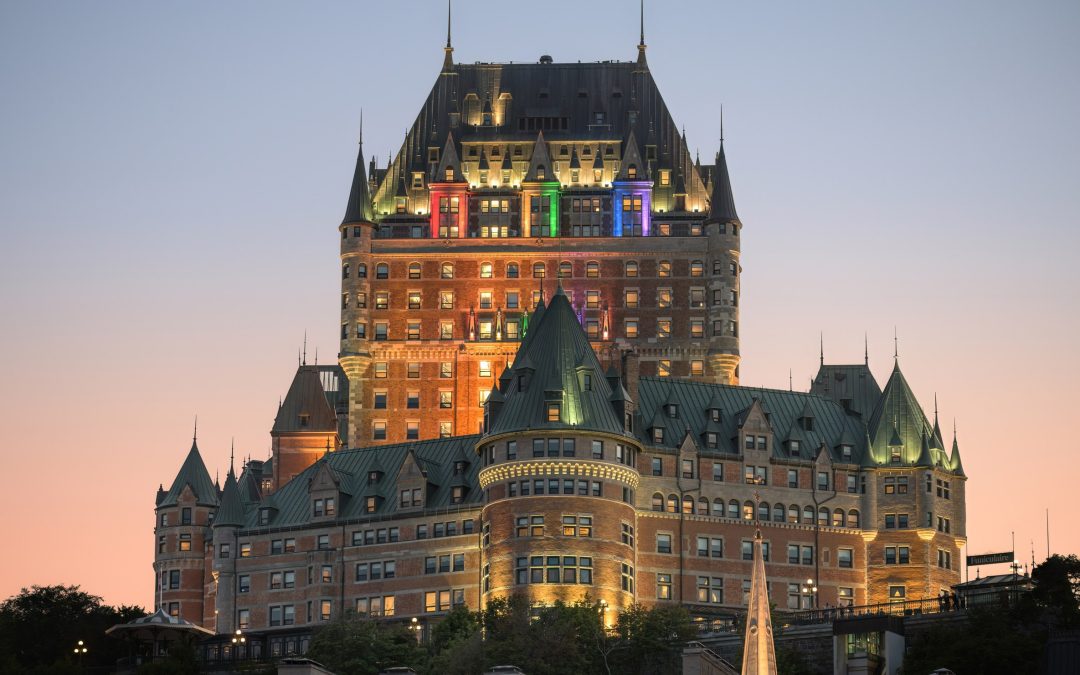
The Château Frontenac is the hotel that defines Quebec City's skyline, and Dufferin Terrace is the boardwalk that gives you the best view of it, the river and, on a clear day, the opposite shore. You do not need a room in the hotel to enjoy the setting. The terrace is free, lively in every season and especially beautiful at dusk.
From here, the Promenade des Gouverneurs and the funicular connect you to the rest of the old city. It is the one spot almost every first-time visitor should see.
3. Petit-Champlain and Place Royale
Below the château, the Petit-Champlain district and Place Royale are the lower town at its most atmospheric: narrow streets, muralled walls, small shops and the church that marks some of the earliest European settlement in the city. It can be busy, but it is still worth the descent.
Go in the morning if you want quieter photographs, then stay for a leisurely lunch. The break in grade between upper and lower town is steep, so the funicular is a kindness at the end of the day.
4. Montmorency Falls
Montmorency Falls, just east of Quebec City, is higher than Niagara, even if it is narrower. A park surrounds the cascade, with a suspension bridge at the top, viewpoints and, in season, a cable car. It is an easy half-day from the old city and a dramatic change from stone streets.
In winter, a cone of ice known as the pain de sucre forms at the base and draws its own visitors. Check conditions and ticket options before you go, especially on holiday weekends.
5. Île d'Orléans
Île d'Orléans sits in the St. Lawrence just downstream from Quebec City, a rural island of farms, orchards, churches and river views. A loop of the island makes a gentle outing for food, cider, fruit stands and quiet villages.
It pairs naturally with Montmorency Falls, which sits near the bridge to the island. Give yourself several hours; this is not a place to rush.
6. Old Montreal and the Old Port
Montreal's historic core is as essential as Quebec City's, but the feeling is different: larger, more commercial in places, and closely tied to the Old Port. Notre-Dame Basilica, Place Jacques-Cartier and the waterfront warehouses set the scene. A morning here is a classic introduction to the city.
Wear comfortable shoes for the cobblestones, and wander a few streets off the main squares if you want a calmer meal. The port area is also a launching point for river views and seasonal events.
7. Mount Royal
Mount Royal is the hill that gives Montreal its name and its best lookout. The Kondiaronk viewpoint looks over downtown, the river and, on a clear day, toward the Monteregian hills. The park itself, designed by Frederick Law Olmsted, is a place to walk, picnic and, in winter, toboggan or ski a short trail.
You can reach the lookout by the park roads, by hiking up from the Plateau or downtown, or by a short bus ride. It is one of the simplest ways to understand the city's geography.
8. Jean-Talon Market
Jean-Talon Market, in Little Italy, is one of the great public markets in Canada. In season it spills outdoors with Quebec produce; year-round you will find cheese, bread, spices and prepared foods that make it easy to picnic later on Mount Royal or in a nearby park.
It is a living market, not only a visitor attraction, and it is a good place to get a feel for how Montreal eats. Go hungry, and go with a bag.
9. Mont-Tremblant
Mont-Tremblant, in the Laurentians north of Montreal, is Quebec's best-known resort village, with a peak, a lake and a pedestrian village that works in more than one season. Winter is for skiing; summer and fall are for hiking, lifts with a view, paddling and a slower village wander.
It is a favourite weekend trip from Montreal and a realistic outing from Ottawa. Book ahead in peak ski weeks and during fall colour.
10. Charlevoix
Charlevoix, along the St. Lawrence east of Quebec City, is a region of hills, river views, villages and a long tradition of food and art. Baie-Saint-Paul is a natural base. The drive itself, and the sense of the river widening toward the gulf, is as much the point as any single stop.
If you have an extra day or two after Quebec City, this is the most rewarding direction to continue. Whale-watching departs from points farther downriver in season, including Tadoussac, if you want to extend the trip.
A simple way to see Quebec
A first trip can be as simple as Montreal for a couple of days, then Quebec City for two or three more, with Montmorency and Île d'Orléans as a side outing. Add Mont-Tremblant or Charlevoix when you have more time. However you shape it, leave space to walk and to eat — that is where Quebec tends to stay with you.
Featured photo: Château Frontenac at dusk by Wilfredor, via Wikimedia Commons (CC0 1.0).